



Large Dog Bone Insulator
Ideal for long-wire antennas, higher power setups, and heavier tension outdoor installations.
View Large Insulator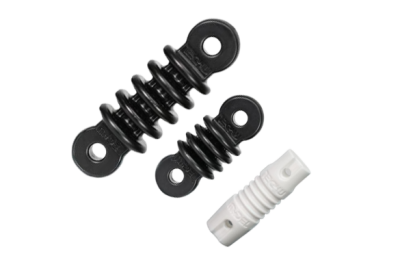
Dog bone insulators are an essential part of any wire antenna installation — improving stability, performance, and safety.
RF insulators, often called dog bone insulators, are one of the most overlooked but most important parts of any wire antenna system. Whether you are installing a simple dipole, an end-fed wire, or a long-wire antenna, these small components are what separate a properly working antenna from a noisy, unstable one.
If you care about performance, reliability, and safety, you need proper RF insulation at the ends of your antenna and at key support points.
A dog bone insulator electrically isolates your antenna wire from anything it is tied to — poles, trees, masts, guy ropes, buildings, or fences.
Without this isolation:
The insulator forces the RF energy to stay in the antenna wire where it belongs.
Many amateurs tie antenna wire directly to a metal mast or to a rope that becomes wet. From an RF point of view, that rope or metal becomes part of the antenna, which can cause:
A proper dog bone insulator creates a clean electrical break and stops this from happening.
The ends of wire antennas are high-voltage RF points. On HF, this can be several thousand volts, especially on end-fed or long-wire antennas.
Using the wrong material (plastic ties, cheap rope, or hardware-store fittings) can lead to arcing, flashover, carbon tracking, heat damage, and long-term failure. RF-rated insulators are designed to handle this safely.
Different antennas and installations need different sizes. That’s why we stock three options:
Ideal for long-wire antennas, higher power setups, and heavier tension outdoor installations.
View Large InsulatorA great all-rounder for dipoles and end-fed antennas, portable or home stations, and moderate tension.
View Medium InsulatorPerfect for lightweight portable antennas, QRP/SOTA setups, temporary installations, and short wire runs.
View Small InsulatorUsing proper RF insulators gives you:
Dog bone insulators are not optional accessories — they are essential RF components. Every wire antenna should have them at its ends and anywhere the wire connects to a support. If you are serious about performance, safety, and reliability, fitting the correct RF insulators is one of the smartest upgrades you can make to your station.
